n8n or Zapier for a finance workflow: let the matching logic decide
Most n8n vs Zapier posts compare price and integrations. For a finance workflow, the tool choice comes down to whether your matching logic needs a fallback rule and a review queue.

The comparison that doesn't answer the question
Most n8n vs Zapier posts compare integration counts, pricing models and ease of use, and they're right about the trade-offs. Zapier's larger app directory gets a workflow running faster, and n8n's self-hosted pricing stops scaling with how often a workflow runs. None of that tells you whether either tool can actually run your reconciliation.
We ran into this building our own matching workflow. The right first question isn't which tool. It's what the matching logic actually has to decide, because that answer picks the tool for you.
Start with what the matching has to decide, not the tool
Before opening either tool, write down three things about the match you're automating.
- Is it a straight lookup, invoice number to invoice number, or does it need a fallback, amount plus currency plus a date window, when the reference is missing or wrong?
- Does an ambiguous case need a confidence-scored step, or is a plain matched / not-matched split good enough?
- Who reviews the unmatched pile, and do they need it in Slack, a sheet, or inside the tool itself?
| Matching logic | Leans toward | Why |
|---|---|---|
| Single deterministic rule (reference match only) | Either tool | Both handle a single lookup and a conditional branch without strain |
| Multiple fallback rules (reference, then amount/currency, then a date window) | n8n | Branching logic across several conditions is easier to read and maintain as a visual workflow, with code nodes available when you need them |
| A confidence-scored step with an AI call | n8n if volume is high; either if volume is low | Per-task pricing adds up fast once an AI call runs on every transaction; a self-hosted n8n instance's cost doesn't move with volume |
| Posting directly into an accounting ledger | Either, but test the write step carefully | Both can call most accounting APIs; the risk is in what gets posted on a near-miss, not which tool calls the API |
The pattern that held up in our own build
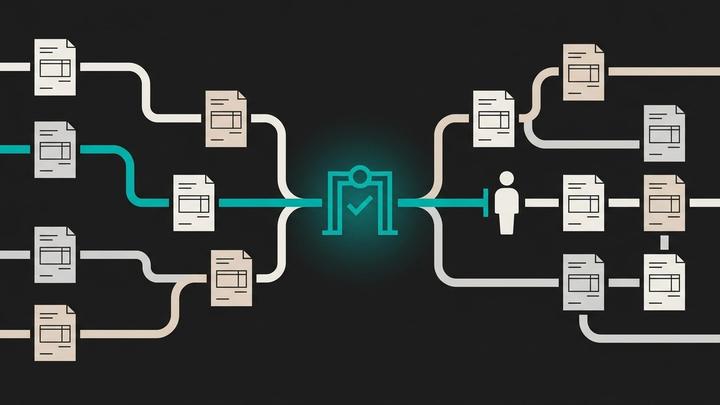
Match by reference first. Where that fails, fall back to amount, currency and a date window. Where it's still ambiguous, score confidence and only auto-post the matches above the threshold your own data earns; send the rest to a named reviewer. This order matters more than the tool. Get the order wrong and the tool choice doesn't save you.
Whichever tool you pick, log every decision: matched by reference, matched by fallback, sent to review, or skipped. The log is what tells you later whether a tolerance is too loose, not the matching step itself.
When the cost argument actually changes the decision
Zapier bills by task. For a workflow that touches a few dozen transactions a day, that's a specific, countable cost. For one that touches thousands, the per-task bill is where the argument for n8n starts, since a self-hosted instance's cost is the server, not the run count.
Weigh that against who on your team can maintain a self-hosted service, because that's the operational cost on the other side of the ledger. It isn't a cost rule so much as a people one: a workflow worth running on n8n still needs someone who can watch it, patch it and debug it when a node breaks.
What this doesn't settle
Neither tool understands your finance rules on its own. A workflow tool moves data and runs the logic you give it. It doesn't know your negotiated supplier terms, your tolerance for a rounding difference, or which vendor's invoices need a second look regardless of how clean the match looks. That logic has to be written by someone who owns the process, in whichever tool you choose, and reviewed before it goes live, not assumed to come bundled with the automation.
Where this fits
Winnit builds the matching logic and the workflow around it, in whichever tool fits the volume and the team maintaining it, as part of rebuilding a finance function rather than as a tool recommendation on its own. The same question of which exceptions clear automatically and which need a person runs through our post on accounts payable exceptions. If you're deciding between automation tools for a reconciliation or matching workflow, a conversation at winnit.ai starts with the logic, not the platform.
Frequently asked questions
Is n8n always cheaper than Zapier for finance workflows?
Only past a certain run volume. Below that, Zapier's task-based pricing is often cheaper and faster to set up than self-hosting n8n, which still needs a server and someone to maintain it.
Can either tool do three-way matching for accounts payable?
Both can call the APIs needed to pull a purchase order, a receipt and an invoice into one workflow. The three-way match logic itself, which fields have to agree and by how much, has to be built by you either way.
Should the confidence-scoring step run inside the automation tool or in a separate system?
Either works. The automation tool is usually the simpler place to start, since it already has the transaction data. Move it to a dedicated service only once the volume or the model choice outgrows what the automation tool can call directly.
What happens to a transaction that fails every matching rule?
It should land somewhere a named person checks, with the data that would help them decide quickly, not in a generic error log nobody watches.
Do we need to pick one tool for every finance automation, or can we mix them?
Most teams end up mixing them. A standalone one-step automation often doesn't justify n8n's setup, while a workflow with several branching rules is usually worth it. Pick per workflow, not once for the whole team.
Does moving to n8n mean giving up Zapier entirely?
No. They can run side by side. Adopting n8n for one workflow doesn't require retiring Zapier for the others.